

July 2024
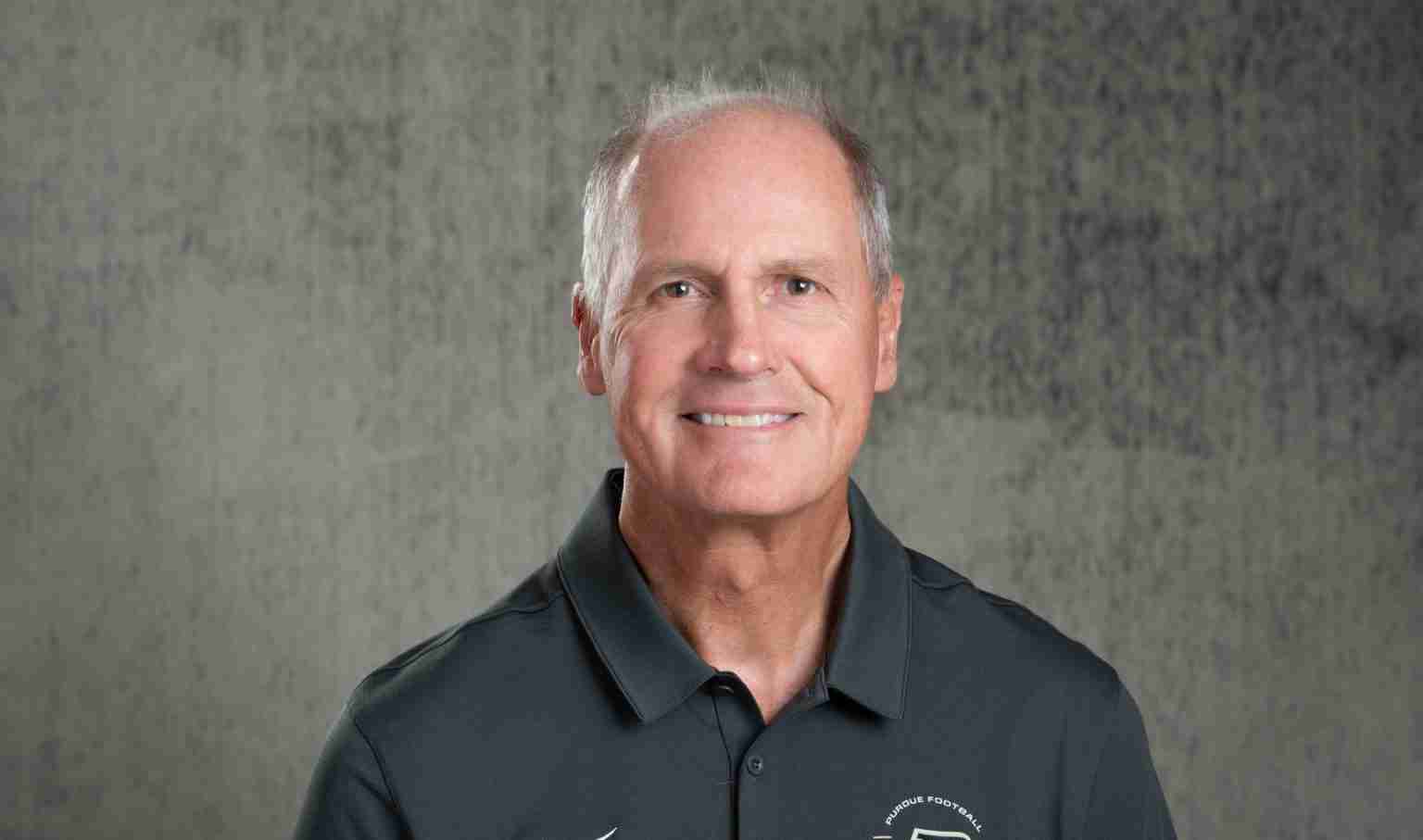
This month, Carmel Monthly is honored to feature former Carmel Greyhound, Purdue Hall of Famer and NFL Colts quarterback Mark Herrmann on the latest cover.
Purdue University recently announced that Herrmann will join the Boilermaker Sports Network as the new color analyst for Purdue football broadcasts, succeeding Purdue football alum Pete Quinn, who retired after 32 seasons. This season, Herrmann will pair up with the Voice of the Boilermakers, Tim Newton.
We sat down with Herrmann, who discussed his formative years as a Carmel High School Football Greyhound, where he was All-State Quarterback 1975 and 1976 and played on Carmel’s 1977 state championship basketball team, winning the Arthur L. Trester Mental Attitude Award. He also shared his experiences as a collegiate athlete at Purdue, where he broke passing records and earned unanimous First Team All-American and Big Ten MVP in 1980, along with his 11 seasons in the NFL, where he finished his career with the Indianapolis Colts with 1,334 passing attempts and 561 completions—a 59.5% completion percentage for a total of 4,015 yards completed and 16 touchdowns.
A Solid Foundation to Grow On
“Coach Dick Dullaghan was my football coach … one of the all-time greats in high school football history,” Herrmann shared. “He was a great and enthusiastic leader. He had a big impact on my [early] career, and I was very thankful to be able to play for him. My family moved to Carmel when I was in sixth grade and went to [what was then] Carmel Junior High School. I had a lot of support and wonderful teammates and coaches. I am very pleased to have played in Carmel.”
Growing up in central Indiana as a young Catholic football player, Herrmann aspired to play for Notre Dame University, but as he began planning for his future post-graduation from CHS, Herrmann decided to traverse a different path … one that would eventually come full circle.
“I narrowed it down to Purdue or Notre Dame,” Herrmann said. “Notre Dame recruited me very hard, but I had a gut feeling that Purdue was the right choice for me and I’d have a sooner opportunity to play. Purdue had just hired Coach Jim Young from Arizona, and I had a lot of trust in him and his vision for the [football] program for me as a quarterback. I wanted to be part of that, and I felt like we could start to build something special up there.”

Herrmann, a Krannert School of Management graduate, shared how he sought to experience everything he could as a college student-athlete and learned to balance athletics and academics while figuring out what his next steps would be.
“I tried to maximize my experiences, my interactions and my relationships,” Herrmann said. “I had a pretty good freshman year. I made a lot of mistakes and learned a lot, and it was kind of like on-the-job training. I just focused on getting better in the offseason and getting ready to really put together three good years. We had three great years [on the field] after my freshman year, and I felt that by the end of those four years [at Purdue], I had really grown and developed. I feel like I had really accomplished something during those years, and they are some of the fondest memories of my entire life.”
When asked what he feels has evolved the most since his days as a Boilermaker and student-athlete, Herrmann replied, “We certainly didn’t have pressures from social media —we were barely on TV. We weren’t worried about how many followers we had, so it was a simpler time for sure. Student-athletes are getting pulled in a lot of different directions with NIL [name, image, likeness], and they’re trying to see what kind of deals they can muster up. Additionally, nobody transferred [schools] back then. If you weren’t playing, you had to get better and find an opportunity. Now, it seems that if you’re not playing, you can go somewhere else, and the next day, you can be on another campus.”
Herrmann added, “The transient nature of college sports, big TV contracts, etc., is so amplified now, and it’s big business. Back then, it was about playing for and representing your school. It was definitely a much simpler time.”
Going Pro and Retiring as a Colt
Spanning 11 years in the NFL, Herrmann began his pro football career with the Denver Broncos, with whom he was selected in the fourth round of the 1981 NFL Draft. He played with the San Diego Chargers, Los Angeles Rams and the Indianapolis Colts.
“Certainly, you never know what’s going to happen and what’s going to transpire,” Herrmann stated. “I was picked by Denver, and [on] one side, it was frustrating that I had slipped back to the fourth [round], but on the other side, it was very gratifying that I was selected in the draft. I went to Denver, which is a great city, with a good attitude and went to work trying to be the best pro that I could be. I ended [up] in Baltimore [with the Colts] for the John Elway trade, and I spent one year in Baltimore—certainly not a great year. I broke my collarbone in the last pre-season game, so I had to sit on the sidelines. There was rumbling that the team was going to pick up and leave [Baltimore]. That was a dark cloud hovering over that year. I headed back to Denver, and all of [a] sudden, like everybody else, I saw the Mayflower trucks heading into Indy [March of 1984]. Mayor [William] Hudnut and Robert Irsay were hand in hand, and there was great enthusiasm about the franchise.”
Herrmann played with the Colts first at Baltimore, then at Indianapolis from 1983 to 1984.
“It was a great homecoming,” Herrmann said. “It was fun playing in the [newly constructed] Hoosier Dome and to come back home.”
Herrmann would leave the franchise to play for the Chargers and Rams before returning to Indianapolis in 1990, where he would finish his career in 1992.
“There were a lot of different things happening with the franchise, and they were still trying to find their way,” Herrmann reflected. “I had one good game before I was released the next day, so I can’t say it was a great finish, but it was nearing the end of my [pro] career, and it made sense that I finished in Indianapolis. Even though my time with the Colts was over, I felt like good things were happening for the city and for the franchise.”
Life After the NFL
Herrmann shared that he and his wife Susie were raising their three kids, Brady, Whitney and Tory—who all graduated from Purdue—in the Geist area. Herrmann was content staying in Hamilton County, so he went on to work in a few different industries before coming back to his alma mater to fundraise for Krannert—now the Mitchell E. Daniels, Jr. School of Business at Purdue University.
Herrmann added, “I jumped on that opportunity and have been there for the last ten years. It went full circle back to where I started, which is pretty special.”
Purdue alum Pete Quinn played with Herrmann as his center during their college years, and when Quinn announced his retirement from broadcasting with Purdue, he suggested that Herrmann fill the vacant spot.
“I had a broadcasting background and did some work for ESPN doing the Mid-American Conference games for about seven years,” Herrmann said. “I thought I’ll give this a try and plug in what I know with my insights and observations and all those things. I think it’s going to be a lot of fun having a chance to cover Purdue on a weekly basis. It will be intriguing and interesting. I also think it will be gratifying to talk about football from my alma mater, and bring some excitement and enthusiasm. Having the chance to work with Tim Newton, Rob Blackman and all those guys is going to be great!”