
The Palladium // Friday, Feb. 28, 8 p.m. ET
Photography // Courtesy of the Center
January 2025
Detroit native Don Was has built a remarkable and versatile career in the music industry, excelling as a musician, record producer, music director, film composer, documentary filmmaker, radio host, and president of the legendary Blue Note Records. Over his career, he has earned six Grammy Awards as a producer, collaborating with an impressive roster of artists, including the Rolling Stones, Bob Dylan, Bonnie Raitt, Willie Nelson, John Mayer, Ringo Starr, Wayne Shorter, and the B-52s.
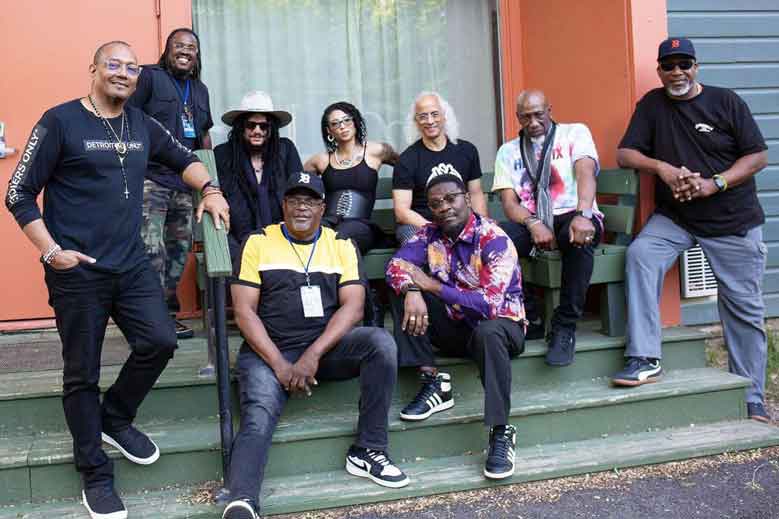
In addition to his production work, Was has toured across the U.S. with Grateful Dead guitarist Bob Weir as part of the Wolf Brothers. His latest project, the Pan-Detroit Ensemble, showcases top-tier Detroit jazz and R&B talents such as saxophonist Dave McMurray and keyboardist Luis Resto, honoring the city’s rich and vibrant musical heritage.
Get your tickets to see Don Was at the Allied Solutions Center for the Performing Arts at TheCenterPresents.org!

Janelle Morrison: When I turned 45, I decided it was time to rebuild my vinyl collection. I’ve managed to find one of my all-time favorites: What Up, Dog?
I got it from a collector in Germany, and it’s the original 1988 pressing—in near-mint condition!
Don Was: How does it sound?
JM: Great! It’s in excellent condition! In a previous interview, I heard you share a story about how you first got into music and jazz. You mentioned being in the car—like many of us were back in the day when our moms left us there—and flipping through the channels when you landed on a Detroit jazz station playing a Joe Henderson song.
You said the message you took from that moment was, “Don, you’ve got to groove through adversity.” How important do you think that message is today? Would you say it’s even more relevant now than it was in 1966?
DW: I don’t know… I mean, it’s probably relevant to everybody. And I think that’s actually a really important component of the stuff that gets categorized under the name jazz.
In addition to being improvisational music and having a vibe, this music came about because an entire culture was demolished and dispersed around the world, and jazz became the secret language of the oppressed. I think that’s kind of mystical, but it’s an important component of why jazz speaks to people all over the world.
Blue Note Records, of which I am president, was created by two guys—Alfred Lion and Max Margulis—who were escaping Hitler. Different cultures, but oppression is oppression. These two guys were attracted to the message of freedom, resistance, and rebellion, and those elements are all in jazz music. They came to New York wanting to be involved in the jazz scene because it spoke to them.
This music spoke to me as a rebellious teenager and taught me a very important lesson: grooving in the face of adversity is kind of universal. There’s always some kind of oppression going on. That’s just the nature of human beings and their civilizations.
JM: Who was another of your earliest influences in addition to Joe Henderson?
DW: Wayne Shorter’s Speak No Evil is one of them. I had dropped out of college, was facing the draft, and wasn’t getting the musical opportunities I’d sought. My life was kind of in crisis, and I’d go home, play the Speak No Evil album—side two—and by the end of it, I’d remember what my hopes and dreams were. I’d remember who I was, and it would realign me. I still listen to that album for that purpose.
JM: As both a musician and an industry leader, what are your thoughts on the importance of supporting young jazz artists as they develop their craft and bring their unique expressions to the music?
DW: I think it’s essential. Music expresses deep emotional information that defies description in conversational language. We have these really rich inner lives, but the vocabulary doesn’t exist to express all of our feelings and to share them. That’s what art does. If we don’t nurture young musicians, jazz will turn into a museum piece rather than a vibrant form of contemporary expression, which it has always been.
JM: Who are some of the up-and-coming artists you’re working with now at Blue Note that we should keep an ear out for?
DW: There’s a whole generation of really brilliant, visionary musicians. There are a couple of guys who have records coming out soon—a trumpet player out of Baltimore named Brandon Woody, who made a debut album that’s going to flip people out, and a keyboard player named Paul Cornish. He comes out of the High School for the Performing and Visual Arts in Houston, the same school that Robert Glasper, Jason Moran, and Beyoncé attended.
Immanuel Wilkins is a brilliant young saxophone player, Joel Ross is a great vibes player out of Chicago, and Melissa Aldana is a wonderful saxophonist. I feel really good about this new generation of musicians coming in to advance the genre further.
JM: What can we expect from an evening with you and the Pan-Detroit Ensemble?
DW: If everyone walks out of the Palladium feeling better than they felt when they came in, I’ll be happy. That’s the ultimate goal—to make you feel good for a couple of hours. It’s kind of a soul-jazz thing, I guess you could call it.
We’re Detroit guys with a Detroit sound! There’s something special about Detroit music. It’s not just accessible, but it resonates all over the world. There’s a rawness, an honesty, and an underlying groove to everything. We just naturally have that sound.